
residents have until December 31 to use their 2025 vision insurance benefits. makes it easy to schedule a family eye exam, shop designer frames, or get fitted for contact lenses...
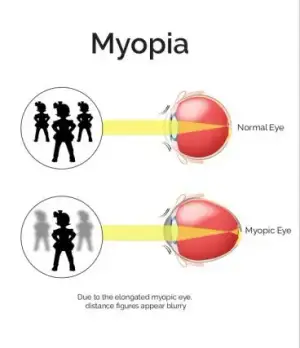
Myopia is one of the most widespread vision problems in the world today, and the numbers are growing. Particularly troubling is that it is being diagnosed earlier in school children and rising in severity.
If you have a young child, we recommend regular eye exams because the condition is known to progress rapidly throughout childhood, causing significant risk to your child’s eye health in the long term.
Visit Dr. Robert Levy at Dr.'s Eyecare Center Myopia Control Center to learn more about myopia and myopia management.
1 in 3 Children Have Myopia
Statistics show an alarming increase in myopia (nearsightedness) among children—25% in the past 40 years alone. Today, myopia affects 40% of the population, and by the year 2050, half of the world’s population is expected to be myopic.
More than 50% of parents are unaware that myopia increases the risk of developing severe eye diseases such as glaucoma or retinal detachment later in life.
Many researchers believe that increased use of digital devices and reduced time spent outdoors are among the causes.
Myopia Increases the Risk of Severe Eye Diseases
Myopia progresses rapidly during childhood. As the level of myopia increases, so does the risk of sight-threatening retinal damage, such as glaucoma, cataract, retinal detachment and myopic macular degeneration (maculopathy). Early treatment through myopia management can slow down or even stop the progression.
The level of myopia a child has is directly correlated to their risk of eye disease — the higher the myopia, the greater the risk.
Higher Risks With High Myopia
Glaucoma. Research shows that people with moderate or high myopia have a 50% higher risk of developing glaucoma.
Cataract. The rate of cataract surgery in people with high myopia is 17% higher than in patients with moderate myopia.
Retinal Detachment. A child between -0.75D and -3.00 is more than 3 times more likely to develop retinal detachment in the future. That number triples for individuals with high myopia (-5.00 and above).
The risk of myopic macula disease is also influenced by the level of a child’s nearsightedness. Children under -5.00 have just a 0.42% of developing this serious eye condition, but anything above -5.00 the risk level leaps to 25.3%.