



Three young girls are sitting together, with one holding a plant and the other two looking at something on a table. There is text in the top right corner that reads 'Myopia Management FAQ'.

Myopia Management FAQ

This page is dedicated to answering all of your questions about myopia, and what you can do to support your child’s healthy lifelong vision.

What is Myopia?

Myopia is a refractive error that causes distant objects to appear blurred caused by the elongation of the eye.

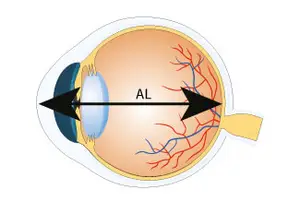
Myopic eyes are slightly longer from front to back than non-myopic eyes, so light is focused in front of the retina instead of directly on it.

Simply put, the meaning of myopia is nearsightedness.

Childhood myopia significantly increases the risk of developing serious sight-threatening diseases later in life. Moderate to severe myopia puts your child at a greater risk of developing cataracts, glaucoma, retinal detachment and age-related macular degeneration, compared to children with low or no myopia.

Myopia management treatments help to slow myopia’s progression and minimize your child’s future risk of eye disease.

Have more questions? No problem.

Below, you’ll find a list of commonly asked questions about myopia that’ll help you gain a better understanding of the condition, and what parents can do to help their kids have life-long healthy vision.

FAQ

Does myopia management work?

Yes! In clinical trials, each myopia management method used was effective in reducing the progression of myopia compared to children who simply corrected their myopia with eyeglasses. On average, myopia management treatments can slow your child’s myopia by 50%.

When does myopia stop progressing?

Myopia usually stabilizes by the early-to-mid 20’s. Once a person’s body stops growing, their eyes will generally stop elongating as well.

Can myopia be prevented?

As of now, there isn’t yet a way to fully prevent myopia. However, certain lifestyle factors can delay myopia onset in children. For example, give your child ample time in the sunlight each day, limit their daily screen time, and encourage them to take frequent breaks from doing near activities. Speak with your optometrist about your child’s risk factors and what you can do for your child’s vision.

Other Questions?

Two young boys smiling and posing for a photo, one wearing a blue shirt and the other wearing a plaid shirt.
Myopia is the most common and rapidly proliferating vision problem in children today. High levels of myopia increase the risk of developing severe sight-threatening eye diseases later in life. Myopia management can slow down or stop myopia progression, thus keeping your child in the safe zone.
A young boy is typing on a keyboard in front of a computer monitor.
Studies have shown that engaging in near work increases a child’s odds of developing myopia (nearsightedness). Read on to learn what you can do to help preserve your child’s future eye health and vision.
An image of the human eye showing its internal structure, with labels such as AL for the anterior lens.
Generally, optometrists only treat myopia by testing visual acuity and prescribing the appropriate corrective lenses. A myopia management optometrist, however, will test far more than just visual acuity and measure the eye’s axial length in order to stop nearsightedness from worsening.
A woman, a man, and a toddler are sitting on the floor and the toddler is eating something from the jar the woman is holding.
Myopia (nearsightedness) causes far-away objects to appear blurry and raises the risk of developing serious eye diseases in adulthood. Myopia management helps slow and sometimes even halt the progression of myopia in children, so the sooner your child starts myopia management, the better the outcome.
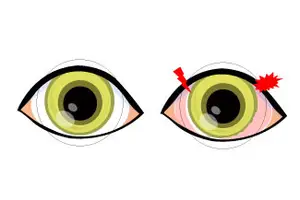
Illustration of a normal eye and an eye with a red spot on the cornea.
There are several ways to manage myopia (nearsightedness), but are they appropriate for children with dry eye syndrome? In most cases, the answer is ‘yes.’

Read Our Latest Posts

A woman in glasses is sitting at a desk in an office, working on her laptop, with a plant and a glass of water nearby, and a cityscape visible through the window.

Don’t Miss Out on Your 2025 Vision Insurance Benefits »

residents have until December 31 to use their 2025 vision insurance benefits. makes it easy to schedule a family eye exam, shop designer frames, or get fitted for contact lenses...
Read More