
IOLs in Burlington, NJ
An IOL or intraocular lens Is a medical device implanted in the eye to replace the eye's natural lens. When the natural lens of the eye becomes clouded from cataracts, cataract surgery is performed in order to remove the clouded lens. Cataract surgery replaces the natural lens with an artificial lens to provide clear vision and improved color contrast. Vision correction through the use of IOLs can also be categorized as a refractive lens exchange.
Through the combination of modern medicine and advanced micro technology, artificial intraocular lenses have achieved amazing results for patients with high nearsightedness (myopia), farsightedness (presbyopia), and even astigmatism. For many patients in , New Jersey, cataract surgery has improved visual accuracy and precision to that which they experienced in their youth.
How Many IOLs Are Available? What Are Their Differences?

Monofocal IOL
Monofocal IOLs are the default choice for standard cataract surgeries. They allow for a single vision correction, which can correct either nearsightedness or farsightedness.
Although monofocals do provide better visual acuity after the surgery, and the removal of cataracts helps with color contrast, monofocal IOLs are the fallback option for patients on a particular budget or with overall good vision.
Although the eye’s natural shape is aspheric, which means not completely circular, the standard aphakic monofocal is used. Sometimes, however, an aspheric monofocal IOL for patients is used to help patients achieve better visual quality. This decision is best left up to your cataract surgeon.Brands of monofocal IOLs:
- Tecnis Aspheric (Abbott Medical Optics)
- AcrySof IQ (Alcon)
- SofPort AO (Bausch + Lomb)
- Softec HD (Lenstec)
Patients who require prescription eyeglasses or reading glasses post cataract surgery are often those who opted for a monofocal intraocular lens. While monofocal IOLs are the starting point or default choice for a cataract surgeon, discussing all of the options with a cataract surgeon in Burlington, New Jersey is recommended.

Premium IOL
Alternatively, there are premium IOLs targeted for more advanced vision correction for those who want to drop prescription eyeglasses altogether.
Premium IOLs correct vision for patients with a blend of nearsightedness and farsightedness. A typical presbyope often requires standard prescription eyeglasses to see at a distance, such as driving, as well as a pair of reading glasses for close-up work.
Whether you’re the type of patient with progressive eyeglasses or multifocal contact lenses, a multifocal IOL or accommodative IOL can be the ideal solution for your vision.
Pros & Cons For Premium IOLs
For the most part, patients who opt for a multifocal IOL will find that their vision adjusts naturally. Patients who lived with their clouded, cataract covered lens with poor color contrast for years will find the issues with multifocal IOLs mild and easy to handle.
Convenience
Premium IOLs take away the hassle of juggling multiple pairs of eyeglasses or daily maintenance of contact lens cleaning & replacement. The premium IOL creates a permanent correction for a patient’s nearsightedness and farsightedness.
An IOL gives a patient clear eyesight on a daily basis, and, unlike eyeglasses or contact lenses, the artificial IOL is completely unnoticeable. An IOL replaces your natural lens acting as a completely new lens for your eye. This is one of the biggest advantages of any intraocular lens.
Cost-Effective
Patients spend hundreds of dollars annually in multifocal contact lenses or updating their pair of progressive lenses. While replacing a pair of eyeglasses may only occur after a few years, over the course of 10 years, the cost of progressive eyeglasses or multifocal contact lenses can easily match but often exceeds the cost of one cataract surgery with a premium IOL.
Intuitive
Premium IOLs are measured and calculated to handle higher-order aberrations, which reduces the effects of bright light interfering with your vision. That means those bright headlights that would have been giant starbursts at night are reduced in their brightness, helping you drive.
Lighting
While Alcon claims the Acrysof IQ ReSTOR multifocal offers optimal image quality in all lighting conditions, not all premium IOLs handle lighting conditions easily. This means your vision may not be as crisp in low light conditions compared to brightly lit conditions, yet you’ll be able to drive safely at night.

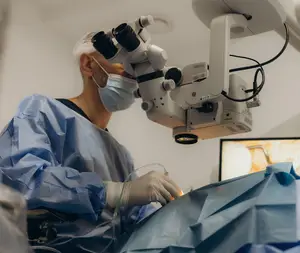
A Cataract Surgeon May Utilize Multifocal & Monofocal IOLs Together
Eyesight varies on an individual basis and even per eye. Due to the health and strength of each person’s vision, a cataract surgeon in , New Jersey may even recommend a mix of IOLs to achieve the right visual balance.
For example, a standard aspheric monofocal IOL for the dominant eye can help with driving, sports, and any distance dependent work, while a premium multifocal for the non-dominant eye can enable one to finish reading through the paper, browse the internet & email, and finish a bit of reading at the end of the day.
Although this “juggling act” might seem a bit unexpected, the convenience can outweigh the need for various pairs of eyeglasses, and the eyes will adjust to the various conditions naturally.
Accommodative Intraocular Lenses (IOLs)
Certain implants called accommodative lens implants may also be suitable for patients who want their new artificial lens to work naturally. Accommodative lenses work along with the eyes’ muscles using hinges to allow the eye to fixate on objects at all distances. Although every intraocular lens offers a unique set of features, accommodative IOLs grant the most adaptivity for one’s eyes.
Since cataract surgery replaces the natural lens of your eye with an artificial lens, patients will experience improvements in their vision, clarity, and color contrast regardless of the IOL they choose. As adjustments in vision can vary from every individual, accommodative intraocular lens implants are engineered with a versatile lifestyle in mind.
Accommodative IOLs are manufactured to address nearsightedness and farsightedness seamlessly to address most visual needs.
An accommodating lens like Crystalens utilizes a premium IOL to restore clear vision among close, far, and mid-range distances. The lens’ design adjusts the focusing power of the eye. This accommodation mimics the way the eye naturally switches focus between distances. For example, clear distances come into focus when your eye muscle relaxes, while far distances require your eye muscles to contract. The lens itself will flatten to adjust for clear distances or make micro movements for magnification when viewing at a distance. Due to the nature of the Crystalens, you can also gain clear night vision without facing halos or glare, which is ideal for late night drivers.
The two most commonly used brands of accommodating IOLs:
- Crystalens AO IOL
- Trulign Toric IOL