

Cataract Surgery at Dr.'s Eyecare Center In Burlington
Cataracts are one of the leading causes of vision loss in people over 45. A condition that commonly develops as the eye ages, by the time we reach 80, more than half of us will have developed a cataract or underwent cataract surgery. Without cataract surgery, many of us would be unable to see the world around us with the same clarity or contrast.
What Are Cataracts?
Cataracts is a disease of the eye that results in the clouding of the eye's natural lens, which lies behind the iris and the pupil.
Cataracts prevent clear images from appearing on the eye's retina, causing mild, moderate, or even severe blurred vision.


Risk Factors For Cataracts
While the risk of developing a cataract does increase as you age, it is not the only risk factor. Research shows that there are environmental, health and behavioral risk factors that can also play a role in cataract development. Many of these risk factors are avoidable and preventable.
- Smoking and excessive alcohol consumption
- Prolonged exposure to ultraviolet (UV) radiation from the sun or other sources
- Obesity
- Diabetes
- Hypertension
- Certain medications such as steroids or statin medications
- History of eye injury or eye surgery
- Family history
Since they are largely a part of the natural aging process of the eye, cataracts can’t necessarily be avoided, however knowing if you have additional risk factors can help you to take preventative steps to delay the onset of the condition.
Detecting Cataracts At Dr.'s Eyecare Center
During the evaluation of your eye health, an eye doctor will carefully examine your lens for signs of cataract formation. If a cataract is noticed and the clouding is causing visual disruption, an optometrist will refer you to a trusted and respected cataract surgeon for surgery, which is the only known cure for cataracts. Dr.'s Eyecare LASIK and Eye Surgery Center, will be there for you providing pre and post cataract surgery care Burlington, in New Jersey.
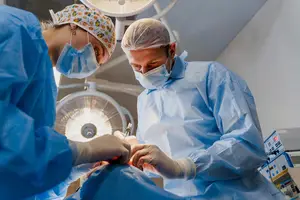
Cataract Surgery | FAQ
Normally, the lens in your eye is normally transparent. The lens, located inside the eye, behind the iris and the pupil, focuses light onto the retina at the back of your eye, where it is converted to nerve signals that are passed to the brain, allowing you to see.
When your lens becomes cloudy, the images projected onto your retina become blurry and unfocused and therefore the signal to the brain is also unclear. You can compare this to looking through a dirty or cloudy window. If the window is not clear, you can’t see well.
Cataracts are part of the natural aging process of the eye and therefore, if you live to an old age, you will likely eventually develop one. While most cases of cataracts develop as part of this process, there are instances of congenital cataracts which are present at birth.
Further, secondary or traumatic cataracts can occur at any age as a result of an eye injury, surgery or disease.
Cataract surgery should be considered when the condition begins to seriously impair your vision to the extent that it affects your daily life such as:
- Reading
- Driving
- Playing golf or tennis
- Playing cards
- Watching TV
Sometimes surgery is also necessary if the cataracts are preventing treatment of another eye problem. Remember, cataracts don’t suddenly develop overnight. They generally start off small and only begin to noticeably affect your vision as they grow. Speak with your cataract surgeon in , New Jersey for more information about when to consider surgery.
The first symptom is usually that your vision becomes blurred, hazy or cloudy. Additionally, you may become sensitive to light, making sunlight, oncoming headlights or indoor lighting appear exceptionally glaring or bright. Colors may seem dim and you may notice halos around lights or double vision.
The symptoms people experience from cataracts may vary. Some individuals even report a temporary improvement in near vision when a cataract first develops, a phenomenon known as “second sight”.
Here is a list of possible signs and symptoms of developing cataracts:
- Blurry or cloudy vision (that can’t be corrected with a change in eyeglass prescription)
- Glare from lamps, sunlight, oncoming traffic when driving at night or indoor lighting
- Colors appear dim and less vibrant
- Halos around lights
- Double vision
- Poor night vision
- Sudden improvement in near vision
If you experience any change in your vision, visit your eye doctor immediately. The good news is that cataract surgery is typically very successful in restoring your vision. Together with your eye doctor in Burlington, New Jersey, you will decide if and when the time for surgery has arrived.
While you may be able to live with mild or moderate cataracts, severe cataracts are treated with surgery. Cataract surgery is a common procedure that has a very high success rate of restoring vision to patients. Modern cataract surgery is frequently done as an outpatient procedure. Patients will have greatly improved vision the next day, and will continue to improve over the next few weeks. Surgery is often done in one eye first, and surgery on the second eye, if needed, may be done 2 weeks later. As with any surgery, discuss your expectations with a cataract surgeon in Burlington, New Jersey.
Well over 90% of operations are successful in restoring useful vision, with a low complication rate. Day care, high volume, minimally invasive, small incision phacoemulsification with quick post-op recovery has become the standard of care in cataract surgery all over the world.
Cataract surgery involves removing the clouded natural lens and usually replacing it with a clear, plastic intraocular lens (IOL) that becomes a permanent part of the eye. It is a relatively quick and painless procedure and you will not feel or see the IOL after the implant.
IOLs are usually made of plastic and most of them are monofocal lenses or single power lenses to correct for distance vision. With advances in technology, specialized IOLs have and continue to be developed to improve the ease and success of cataract surgery and to improve the patient’s vision. Now, from multifocal IOLs to IOLs that block UV and blue light radiation, patients have greater options available to them.
Presbyopia-Correcting IOLs – Multifocal or Accommodating IOLs
Presbyopia is another common condition associated with aging, in which the eyes begin to have difficulty focusing on near objects. This condition makes it hard for people to read the small print, which is why many people over 40 keep reading glasses close by.
Similar to bifocal or multifocal reading glasses, accommodating and multifocal IOLs provide vision correction for far and near (reading) vision to provide the patient with a clear sight at a range of distances without the need for reading glasses. Although you may be able to do most activities without glasses, there may be situations that require an eyeglass prescription to sharpen your vision.
Multifocal lenses contain multiple lens powers for various viewing distances while accommodating lenses have one lens power but accommodate or move with your eye as it focuses on objects at a range of distances.
Other Types of IOLs
IOLs that block out ultraviolet (UV) and blue light radiation, which have both proven to be dangerous to your eyes, are also available.
Other premium IOLs exist such as aspheric IOLs which, similar to your real lens, are aspheric in shape and can improve visual quality, especially in low light conditions or toric IOLS which are suitable for correcting astigmatism, nearsightedness or farsightedness. Premium lenses such as these are more costly than standard monofocal IOLs and may not be right for everyone.
Selecting the right IOL for your eyes, lifestyle and vision is a decision that should be made together with a trusted eye doctor. For some people, it may even be an option to place different IOLs in each eye.
Discover the perfect combination of IOLs for your eyes in , New Jersey by visiting our practice, today.
Schedule Your Cataract Consultation
If cataracts are affecting your vision or daily activities, expert care can make a difference. At Dr.’s Eyecare Center, we provide comprehensive cataract evaluations and coordinate care with trusted local surgeons to ensure seamless treatment and follow-up. Schedule an appointment today to take the next step toward clearer vision and improved quality of life.