Dry Eye Syndrome is a highly common eye condition. In fact, it remains one of the top reasons that drive patients to seek help from eye care professionals trained in treating dry eyes. Today, there is increasing awareness about this eye condition among both the general public and eye practitioners.

A recent survey revealed that out of the more than 30 million Americans who have symptoms of Dry Eye, only 16 million are diagnosed. Surprisingly, just 1 million out of these patients receive medical attention. These numbers are a concern, since there are millions of people suffering needlessly.
Dry Eye Disease: Signs And Symptoms

Dry Eye Syndrome can negatively affect a patient’s quality of life in many ways. Common signs and symptoms include:

When Should Scleral Lenses Be Incorporated?

Fortunately, scleral lenses can help provide relief to patients suffering from Dry Eye. However, the common concern is deciding on the right time to incorporate scleral lenses into a dry eye treatment plan.

Scleral Lenses in Burlington As A Tertiary Therapy

Scleral lenses should only serve as tertiary therapy, after overnight treatment options and prescription medications such as moisture goggles or ointment have been used. However, scleral lenses should be incorporated before the long-term use of steroids, surgical punctal occlusion, and amniotic membrane grafts.

Some of the other tertiary therapies that can be recommended alongside scleral lenses include:

  • Autologous/allogenic serum eye drops
  • Oral secretagogues
  • Soft bandage contact lenses

Like scleral lenses, these treatment procedures are highly effective. However, they should only be used if the primary and secondary therapies fail to improve the patient’s Dry Eye condition.

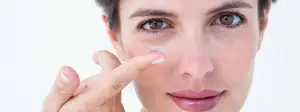
A woman is putting a contact lens in her eye.

Scleral Lenses vs. Daily Contacts for Dry Eyes

At times, an eye care professional may recommend daily disposable contact lenses for patients with a Dry Eye condition. These daily contacts are single-use lenses, which can be disposed of and replaced with a fresh pair the next morning.

However, for certain patients, traditional soft contact lenses are not an option, as the lenses sit right on the cornea, which can be very irritating for dry eye patients. Moreover, they tend to act as sponges, soaking up the moisture from the surface of the eye. Wearing soft contact lenses can, therefore, prove to be virtually unbearable for the dry eye patient.

Scleral lenses, on the other hand, are comfortable since they vault over the cornea and rest on the sclera, thus avoiding the sensitive cornea.

Moreover, the zone between the surface of the cornea and the scleral lens is filled with a saline solution. This acts as a constant source of hydration for the eye and provides ongoing relief for the dry eye patient.

Scleral Lenses For Sjorgen’s, MGD, And Severe Dry Eye

Severe Dry Eye can be caused by medical conditions such as Sjögren’s syndrome or Meibomian gland dysfunction (MGD).

Contact Our Burlington Eye Clinic Today!

Contact us if you notice any pain or discomfort with your eyes. Dr. Robert Levy will be available to answer any of your questions and concerns. An amazing experience awaits you at our office.

Serving Patients From:

Other Specialty Contact Lens Fittings In Burlington

Our practice specializes in custom contact lens fittings for a wide range of specialty contact lenses. This includes:

  • Gas permeable (GP) and rigid gas permeable (RGP) lenses
  • Multifocal contact lens fitting for presbyopia and myopia
  • Soft daily lenses for moderate dry eye, discomfort, and eye allergies
  • Scleral lenses for patients with keratoconus, corneal scarring, severe dry eyes, corneal transplants, and irregular astigmatism.

Dr. Robert Levy successfully helped patients from all over New Jersey including Burlington, Cherry Hill, Trenton, Hamilton Township